If you know of an event that you feel should be listed on our calendar, please send details to info@mjdispensaries.com ~Thank You

Latest Headlines and Information

Showing posts with label city council. Show all posts

Friday, April 27, 2012

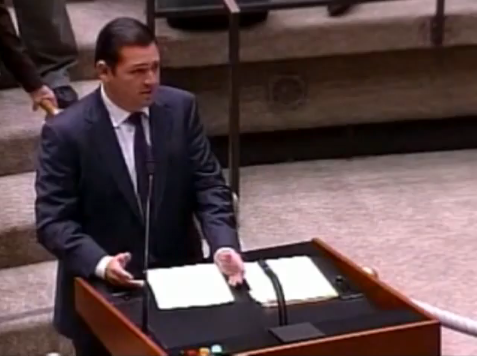
VIDEO: John Grace public comment regarding medical marijuana in Long Beach


John Grace public comment regarding medical marijuana in Long Beach. From Long Beach City Council Meeting April 17, 2012.

The Human Solution - the-human-solution.org

Wednesday, March 28, 2012

NEWS: In Long Beach City, Frustration Leads to Desperation in Solving Medical Marijuana Issue

LONG BEACH, Calif. - On March 21 at 4:41pm, plain clothes officers not providing identification of the Long Beach Police Department, along with Long Beach Department of Finance workers, initiated an illegal raid against NatureCann Non-Profit Patient Group. Acting without a warrant or court order, the officer incursion involved forcefully breaking into the patient collective where three (3) patient volunteers were assisting fellow patients. An observer recording the event outside of the collective was knocked down by an officer who told him the police "can do whatever they want." Scores of businesses along the Atlantic Avenue Corridor were disrupted by the police presence and activity.

Although no warrant was obtained by the department, and no resistance was offered by NatureCann, specialized assault equipment and armed tactics were utilized to force entry into the property. In an attempt to avoid being filmed and prior to making entry, an electronic video surveillance system designed to assist law enforcement was instead destroyed and disabled by the officers. Three (3) volunteers were abducted by the officers on-site while other officers arrested the collective's security guard at a nearby restaurant where he was on break.

When asked about the reason for the incursion and arrest, one of the female NatureCann patient volunteers who declined to be named for fear of reprisal said, "I was in fear for my life, looking at the end of a loaded firearm pointed at my head, by an unidentified intruder twice my size. They broke in and started attacking us. We follow all State laws and provide for seriously ill patients." It was later determined that the volunteers had been arrested under a city ordinance recently rendered invalid by a higher court.

In February, 2012, the Long Beach City Council enacted a ban of all medical cannabis patient dispensaries after its permitting ordinance requiring "substantial" and non-refundable fees was deemed unconstitutional by a California appellate court. Although the ban states it applies to all medical marijuana dispensaries in the city, dispensaries that had paid the substantial fee are not being targeted by authorities. The city announced it would enforce the ban only against patient groups that had not paid the fees. Days after Long Beach passed its ordinance banning all collectives, another California appellate court deemed similar bans illegal.

In June, 2011, a Los Angeles Superior Court judge found that an earlier warrantless raid by Long Beach police officers and officials was improper. Patients involved in that case have filed a suit against the city seeking damages. In addition to being arrested, the volunteer said the police had taken all of the patient group's medication as well as electronic equipment without inventorying or reporting the seizures.

For more information contact Sergio Sandoval,Director of Public Relations, Pappas Law Group,Phone #949-382-1485Email – sergio.sandoval@pappaslawgroup.com

Source: NatureCann

The Human Solution - the-human-solution.org

Thursday, March 8, 2012

VIDEO: Mike Oliveri Gets the Final Word at a LA City Council Meeting

Due to transportation difficulties, Mike Oliveri (patient activist) arrives at the Los Angeles Council Meeting right at the tail end of Public Comment. Nevertheless he still manages to get in and on record, the case for medical marijuana collectives.


The Human Solution - the-human-solution.org

Tuesday, July 26, 2011

NEWS: Medical Marijuana Limitations Rescinded

More than 50 speakers took turns Monday requesting the San Diego City Council rescind its medical marijuana policy, and by the end, the budget-strapped officials agreed.

Councilmembers voted 6-2 Monday afternoon to end restrictions on medical marijuana dispensaries approved earlier this year, saying the city cannot afford the cost of a special ballot measure on medical marijuana.

They added that the repeal is not a solution and rules are needed for the local medical marijuana industry.

Had the council not repealed that ordinance, voters would have decided the issue because marijuana advocates gathered enough signatures to put the issue on the ballot.

Nearly all of Monday's speakers requested the council rescind an ordinance it approved in April that severely limited the number and location of medical marijuana dispensaries.

Deborah Gostin, who says she needs marijuana to control symptoms of multiple schlerosis, said before the decision that she would have a tougher time buying the drug if the zoning restrictions remain.

But Scott Chipman of San Diegans for Safe Neighborhoods hoped the Council would shut down all dispensaries because they are selling the drug to many people who do not need it for medical reasons, he said.

Source: NBC San Diego

Wednesday, February 23, 2011

VIDEO: Concerned patient advocates speak out on dispensary ban at Westminster City Council Meeting


David and Marla James (of Americans for Safe Access) speak on a Medical Marijuana Ban at the Westminster City Council Meeting during public comment. February 23, 2011.

Tuesday, February 15, 2011

VIDEO: Former cannabis collective operator would like some answers from San Diego City Council


Adela Falk, during "public comment", poses some unanswered questions to the members of the San Diego City Council regarding their stance on medical marijuana collectives in San Diego, California. [City Council Meeting on February 15, 2011]

NORML Women's Alliance

Wednesday, February 9, 2011

VIDEO: David Zink on the medical marijuana dispensary case known as PAC vs Long Beach


David Zink during public comment at the Long Beach city council meeting shares some insight into a medical marijuana dispensaries case PAC vs Long Beach. From Tuesday, February 8, 2011.

LEAP - Law Enforcement Against Prohibition - www.leap.cc

Sunday, February 6, 2011

VIDEO: Montel Williams testifies before the Los Angeles City Council regarding medical marijuana


Montel Williams, a multiple sclerosis (MS) patient, shares his knowledge and personal insight of medical cannabis, safe access for patients and more at the Los Angeles City Council meeting held on January 21, 2011.

LEAP - Law Enforcement Against Prohibition - www.leap.cc

Tuesday, January 18, 2011

NEWS: LB tightens up medical marijuana law

LONG BEACH - Medical marijuana advocates came close to getting some leeway Tuesday in the city's marijuana regulations, but fell one vote short of a more lenient version of the law.

The council voted 5-4 to finalize an amended ordinance that prohibits medical marijuana collectives from being within 1,000 feet of parks, among other requirements. The council had already approved a law in March that outlawed collectives near schools, in residential areas or near one another, but decided to make it more restrictive.

The change is expected to force 11 collectives or cultivation sites to close, leaving 26 citywide, mostly in the western half of Long Beach.

The original law also required that collectives go through a permitting process, and that process hadn't been completed when the council decided late last year to alter the ordinance.

Council members Rae Gabelich, Steve Neal, James Johnson and Dee Andrews voted against the amendment. The council also voted 7-2, with Gabelich and Andrews dissenting, to establish a one-year moratorium on issuing new medical marijuana permits.

"I continue to oppose the changes in this ordinance because it changes the playing field midstream," Gabelich said. She added that changing the ordinance opens the city to more litigation.

Long Beach was already facing seven lawsuits over the law, and Deputy City Attorney Mike Mais said that an eighth lawsuit was filed this month.

Johnson voted against the law for a different reason from the others, maintaining his position that the city should restrict the number of collectives to two in each of the nine council districts so that no area has an over-concentration of them.

Other aspects of the new regulations are a 45-day public comment period on proposed collective locations, after which the council will have a hearing to determine whether the collectives should be allowed; a requirement that video surveillance systems be installed; and limiting collectives' hours of operation to 9 a.m. to 7 p.m. Each collective also will have to submit an annual audited report on revenues, expenditures and operational costs.

Source: Long Beach Press Telegram

Monday, January 17, 2011

NEWS: Medical marijuana law will again go to council

LONG BEACH - Proposed medical marijuana laws are scheduled for a final vote by Long Beach City Council members Tuesday night.

Usually at this point, the vote would be simply a rubber stamp and wouldn't warrant further discussion by the council.

But considering that this is a revision of a previously approved law, which never fully went into effect - and the council was divided over changing it - there could be attempts to alter it one more time.

In March 2010, the council approved stringent rules for marijuana collectives, including prohibiting them near schools, in residential zones or close to one another.

The proposed additional regulations, which got an initial vote of support in December, would also restrict collectives from being within 1,000 feet of parks, among other regulations.

Medical marijuana advocates and operators of collectives weren't happy with the initial ordinance, but they were livid over the council's attempt to change it after collectives had invested money, paid fees and gone to the trouble to meet all of the original law's rules. About a dozen collectives or cultivation sites will be forced to close once the new parks restriction is in place.

The vote on the proposed laws is the last item on the council's agenda.

Source: Contra Costa Times

Saturday, January 1, 2011

Wednesday, December 22, 2010

VIDEO: Adela Falk speaks on medical marijuana at San Diego City Council Meeting


Adela Falk's public comment regarding the San Diego medical marijuana ordinance. From San Diego City Council Meeting on Tuesday December 7, 2010.

NEWS: Pot Collectives Vow To Fight Further City Restrictions

The medical marijuana collectives facing elimination in Long Beach have vowed to keep fighting for their right to exist — in the face of a second reading to finalize the law this January.

During its Dec. 14 meeting, the City Council passed a first reading for the medical marijuana ordinance that will eliminate as many as a dozen more collectives. Many of those collective owners have come out publicly, or through an attorney, pleading with the council to allow for relocation.

Some collective owners said they are trying to remain optimistic they will get an opportunity to relocate.

The original ordinance was enacted in the late summer, eliminating many of an estimated 90-plus collectives through an application and lottery process. After the lottery, the number of potential collectives was reduced to 32.

Then in early November, Third District Councilman Gary DeLong, Fifth District Councilwoman Gerrie Schipske and Fourth District Councilman Patrick O’Donnell introduced an agenda item for further restrictions. The council decided to enact park buffers. It was believed then that an additional nine collectives would be eliminated with the newer restrictions added.

Vance Watson, president of One Source Discount Caregivers, 5115 Atlantic Ave., said he believes his operation has legal grounds to stop the city from shutting it down. His dispensary was a winner in the lottery earlier this year, but would be shut down by the new ordinance restrictions not allowing collectives near a park.

“They pulled the rug right out from under us,” he said.

Watson said he has been working with three different lawyers in regards to what types of action his dispensary can take, depending on whether the council passes a second reading with no changes from the Dec. 14 vote.

To some owners, the process has been discredited with the latest round of restrictions, which appear to single out certain collectives — including Herbal Solutions Naples, 5746 E. Second St.

In a statement released by ownership, Herbal Solutions accused the council of “trying to exercise their legislative powers in an unabashed attempt to change the outcome of the lottery.”

“This is not a minor issue and all citizens of the city should be concerned with the precedent that this amendment sets,” the statement says.

Watson said the City Council removing beaches from the definition of parks also has raised some eyebrows.

“Who benefits from them not including beaches?” he said. “Aren’t kids still at beaches? What kind of politicking is really going on behind the scenes?”

Ninth District Councilman Steven Neal initially brought up striking beaches from the definition during the council meeting. He said his intent has been to move forward with rules that follow the original ordinance as closely as possible.

“The city has been levied with several lawsuits to date, and any changes would add further lawsuits,” he said.

The removal of beaches from the parks definition is likely to spare one or two collectives, according to initial estimates.

DeLong said his intent with further restrictions were motivated by his constituents.

“My goal is to significantly reduce the amount of dispensaries and we accomplished that goal on Tuesday (Dec. 14),” he said. “It’s hard to predict the future, but I don’t expect any additional changes going forward. However, I do expect changes a year from now (when the moratorium on accepting applications ends).”

There is still some optimism that relocation will be allowed for the nine-plus collectives that are scheduled for displacement, Watson said.

“Everyone in my situation believes the city will allow for relocation,” he said.

Herbal Solutions also is holding out hope.

“Herbal Solutions Naples has publically offered to relocate its collective out of Naples in a good faith effort to address community concerns,” the statement said. “The city’s refusal to provide relocation is baffling and amounts to nothing more than a penalty and spot zoning. Herbal Solutions Naples remains hopeful that the council will vote to allow impacted collectives to relocate when the ordinance is considered again in January, but is prepared to take legal action to protect its rights in the event that the council insists on adopting an unjust and unlawful amendment.”

Watson said his lawyers are looking at the law in regards to vested rights issues and potential impact studies they feel the council should have authorized before voting on the law.

The City Council does have the right to revisit the issue in January (Jan. 4 is the next scheduled council meeting) before passing a second reading, assistant city attorney Mike Mais said. He said the city’s attorney’s office is confident the law will stand up in court regardless.

“We feel like we’re on legally solid ground,” he said. “We’ll do our best to defend it.”

Source: Gazettes

Merchant Accounts for Dispensaries. Great Rates!

VIDEO: Adela Falk speaks on medical marijuana at San Diego City Council Meeting


Adela Falk's public comment regarding the San Diego medical marijuana ordinance. From San Diego City Council Meeting on Tuesday December 7, 2010.

NORML Women's Alliance

Thursday, December 16, 2010

NEWS: Whittier City Council extends medical marijuana moratorium

The City Council has voted to extend a moratorium on new medical marijuana dispensaries for another year.

The council in December 2009 approved the first moratorium because of fears that more such businesses would flood into the city.

A permit for one such business, Whittier Hope Collective, was approved in October 2009. It opened in July.

More time is needed to look at other cities which have placed a cap on the maximum number of such businesses, stated Jeff Collier, director of community development.

The council also increased parking fines by $3, citing an increase in the surcharge it must pay to the state.

Source: Whittier Daily News

Wednesday, December 15, 2010

NEWS: Council Tweaks Medical Marijuana Law Again

The number of possible medical marijuana collectives in Long Beach continues to shrink.

The City Council passed a first reading Tuesday of the medical marijuana ordinance that will eliminate about a dozen more collectives by adding a buffer zone for parks after several different substitutes and amendments were turned away.

The council passed the following rules:

• Collectives will not be allowed to exist within 1,000 feet of parks (in addition to the 1,000-foot restriction to elementary and middle schools, 1,500 feet from high schools and 1,000 feet from other collectives). However, beaches were stricken from the definition of parks for the purposes of this ordinance.

• There will be a 45-day public comment period regarding the propriety of issuing a permit for a particular location. There will be a City Council hearing within 60 days after the 45-public hearing period.

• Each approved collective will need to install and maintain video surveillance equipment that will allow the police department to monitor the exterior grounds for the purpose of looking into criminal and nuisance activity.

• Collectives will be allowed to operate only between 9 a.m. and 7 p.m.

• Each collective will be required to submit an annual audited report prepared by a CPA that will detail statements including revenue, operational costs and expenditures.

• There will be a one-year moratorium on accepting any new applications starting immediately.

The original law had been enacted in the late summer, eliminating many of an estimated 90-plus existing collectives through an application and lottery process. After the lottery, the number of potential collectives was reduced to 32.

Then in early November, Third District Councilman Gary DeLong, Fifth District Councilwoman Gerrie Schipske and Fourth District Councilman Patrick O’Donnell introduced an agenda item for further restrictions. The council decided to enact the park buffers. It was believed at the time that an additional nine collectives would be eliminated with the newer restrictions added.

For much of the meeting, the debate centered on three issues: Whether patients’ rights were violated with further security camera measures, if collectives eliminated by newer restrictions should receive a 60-day relocation period and whether the council should go further and enact rules that would restrict the number of collectives to two per district.

Eighth District Councilwoman Rae Gabelich said she was concerned with requiring collectives to have a “live tape” setup for the Long Beach Police Department to use at all times. Several people in the public comment portion of the item echoed her sentiments.

“Is it (this kind of measure) going to be at a CVS or Walgreens?” asked Christina Roberts, a First District resident and U.S. Army veteran.

Seventh District Councilman James Johnson remained adamant that the council vote to cap the number of collectives to a maximum of two per district. He pointed out that as the buffer zones stand right now, that his and other districts in north Long Beach have a much larger number of collectives. He said he wanted a “more equitable distribution” so that no district was overburdened, and that patients would have equal access all over the city.

Ninth District Councilman Steven Neal made a motion to adopt the further restrictions, but to allow those displaced a relocation period of 60 days — and to remove beaches from the parks definition for this specific ordinance. That motion passed 5-4.

However, during the council’s vote to impose the one-year moratorium, it appeared as though Schipske had a change of heart. She asked the council to reconsider the vote that had passed 5-4. She then changed her vote and the measure failed 5-4 (Schipske, O’Donnell, Johnson, DeLong and Second District Councilwoman Suja Lowenthal voted against).

Earlier, the council voted 7-2 (Johnson, O’Donnell dissenting) against Johnson’s request for a maximum collective cap of two.

The council passed its final ordinance 6-3 (Johnson, Gabelich and Sixth District Councilman Dee Andrews dissenting).

The new restrictions could open the city up to more lawsuits from collectives. Attorney Richard Brizendine warned the council that nine collectives already had approached him about potential litigation against the city.

Lobbyist Carl Kemp, who said he was representing four collectives, pleaded with the council to at least allow for the 60-day relocation amendment to pass.

“You have to let people relocate if you change the rules (further),” he said.

The council still must pass the ordinance change on a second reading before it goes into effect.

Source: Gazettes

LEAP - Law Enforcement Against Prohibition - www.leap.cc

Monday, December 13, 2010

NEWS: San Jose council rejects plan to ban pot clubs

The San Jose City Manager's Office wants to take a hard line on medical marijuana, arguing that the city council should ban all 100 or so cannabis clubs in town and start from scratch with new regulations.

But on Monday, council members said: "Not so fast." In an 8-2 vote, they adopted a new 7 percent tax on dispensaries, as city voters approved last month.

The council put off for another day the burning questions of bans, caps on the number of cannabis clubs and even their basic legality.

Council members Pete Constant and Rose Herrera voted against the motion, saying the legality and regulation of the pot clubs needed to be resolved before taxation. Councilmember Kansen Chu was not present.

"We need the money, pure and simple,'' said Mayor Chuck Reed in support of the vote. He later added that he, too, was concerned that current city regulations seem to hold that all pot sales are illegal.

The vote came at the end of an impassioned special meeting. The council chambers were crowded with people arguing against any ban or heavy restrictions on what they insisted is legal medicine.

While relieved there was no ban, dispensary owners and medical marijuana movement leaders reacted with some dismay to the new tax, which will take effect early next year.

"Most people would be against taxing something that the city refuses to recognize as legal," said marijuana activist Lauren Vasquez, despite the overwhelming voter support for Measure U on last month's ballot.

Nearly 80 percent of city residents who weighed in on the question -- some 184,000 people -- blessed the measure, which proposed a tax of up to 10 percent of pot sales to help pay for city services like police, street maintenance, parks and libraries.

Still, the legal right to medical marijuana has become hugely contentious throughout the state over the last year. Dispensaries have proliferated since the Obama administration indicated it would take a softer stance on medicinal marijuana laws.

Without regulations, San Jose has gone from a handful of clubs to a hundred, even though they remain technically illegal under city zoning codes.

Even with the state coming up with legal guidelines, local jurisdictions have crafted a patchwork of ordinances to handle the issue. Several major California cities allow and regulate their marijuana dispensaries, including San Francisco, Oakland and Los Angeles. Some local towns, such as Gilroy and Los Altos, have banned them all together. Others, like San Jose, are still struggling with some sort of unified policy.

And to complicate an already complex issue, a local narcotics task force has begun a series of raids on the dispensaries, under the theory that they are profit-making and therefore illegal under California law. State guidelines and some legal precedent suggest that medical marijuana distribution should be non-profit, but what exactly constitutes a "profit" remains highly debatable.

During Monday's council meeting, Santa Clara County Supervising Deputy District Attorney Frank Carrubba -- who helped develop the city manager's plan to ban the clubs -- said he thought it was possible all the marijuana dispensaries in the state are illegal. Many in the audience responded with amazed laughter.

State voters in 1993 passed Prop. 215, decriminalizing marijuana for the treatment of medical conditions with a doctor's recommendation. But pot advocates and foes alike say the law is the most vague of any medicinal marijuana statute in the country.

It was from this legal foundation that many of the city administration's recommendations sprang. City Manager Debra Figone suggested the council ban the existing dispensaries, then hold a lottery and select up to 10 collectives to legalize and heavily regulate.

Each chosen collective would have to pay $104,645 registration fee. That money, Figone proposed, would pay for five additional city staff -- including three police officers -- to monitor and regulate the new collectives.

Under her plan, the collective also could not sell marijuana; instead, they could create pot sharing operations, with each member performing a duty.

But there was some cynicism toward the manager's proposal, especially in light of Measure U's seeming mandate. Councilman Sam Liccardo archly asked city lawyers how the collectives could pay for required security if they could not make any money from their operations.

Perhaps the most resistant to Figone's proposal was Councilman Pierluigi Oliverio, who has long championed regulating the cannabis clubs. He scoffed that he did not see how a bartering system for marijuana would work.

Oliverio had proposed his own plan to reduce the number of dispensaries to about 30 and create an ad hoc committee to bring forth a proposed ordinance.

The council rejected his plan for now. Instead, broader regulatory and legal issues were referred to the council's Rules Committee, which will take them up at an unspecified point in the future.

In the meantime, Oliverio said the passage of Measure U -- and the council's Monday vote -- will help winnow the number of local pot clubs. He predicted some dispensaries won't allow themselves to be audited and others won't pay the tax, so they'll be shut down.

"It's going to thin out the herd," he said.

Source: Mercury News

LEAP - Law Enforcement Against Prohibition - www.leap.cc

Thursday, December 2, 2010

VIDEO: Adela Falk's Presentation on Medical Marijuana to SD Council


Adela Falk's Presentation on Medical Marijuana before the San Diego City Council. From council meeting on November 9, 2010.

LEAP - Law Enforcement Against Prohibition - www.leap.cc